Telephony · Lines & Jacks
Lines & Jacks
Before data raced through glass, it ran through a pair of copper wires in the wall. How the phone line got there changed more than once. Each generation solved the last one's problems and created new ones.
Plugs & Jacks
The 4-hole jack was the old Swiss telephone jack. Very rugged, but also pretty bulky. It stuck around for a surprisingly long time.
The ADo 8 was the eight-pin jack for the Telex machine. Every teleprinter ended in this standardized 8-pin plug, in use roughly from the 1960s into the 1980s.
The TT83 plug from Reichle & De-Massari was distinctly more modern, with six contacts. Its build quality, unfortunately, wasn't great. Customers often struggled to seat the plug all the way, or plugged it in upside down, and then nothing worked at all.
RJ45 finally wasn't officially meant for the phone at all; it arrived with ISDN. It ended the plug misery for good.
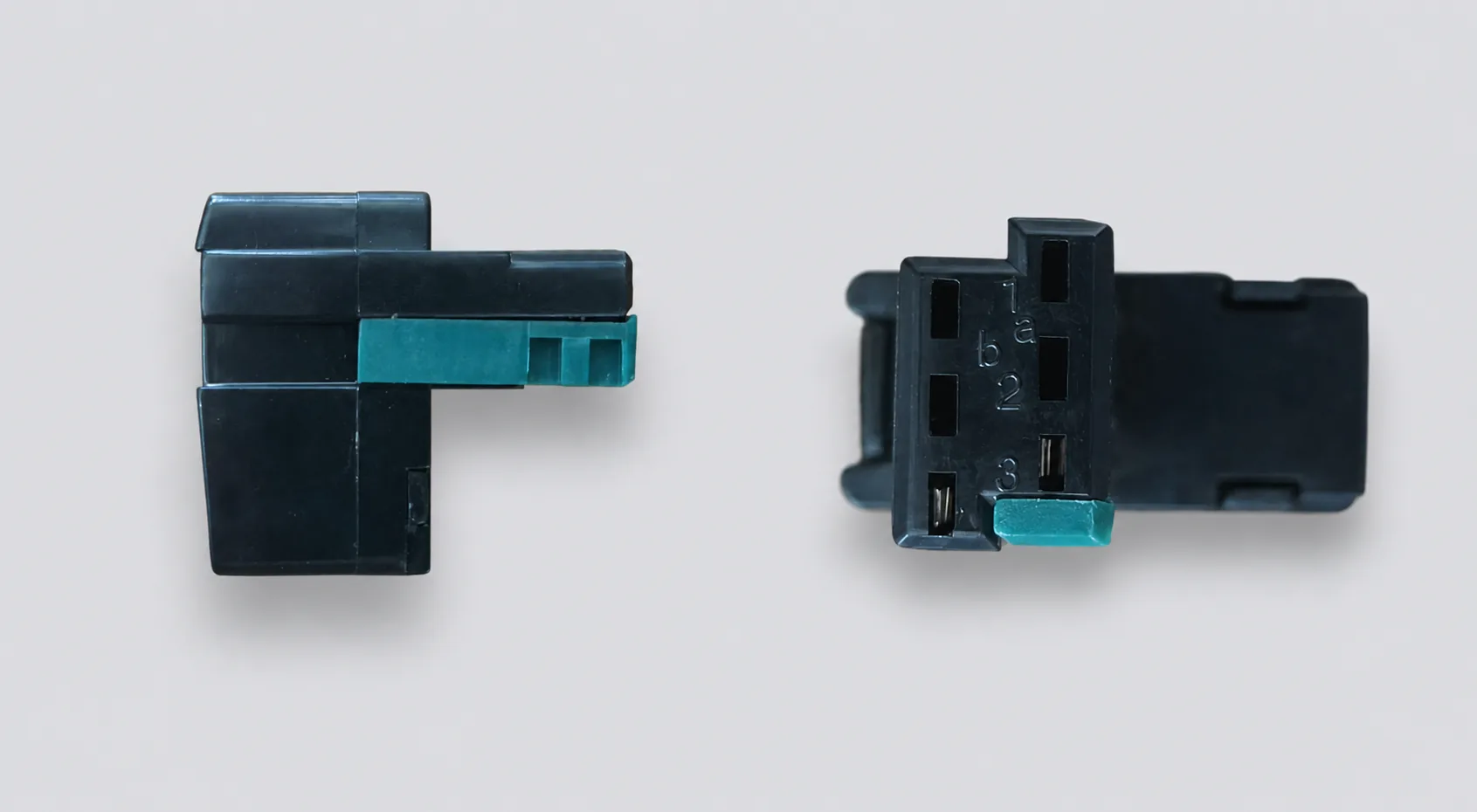
TT83 plug
Reichle T+T 83, six contacts.
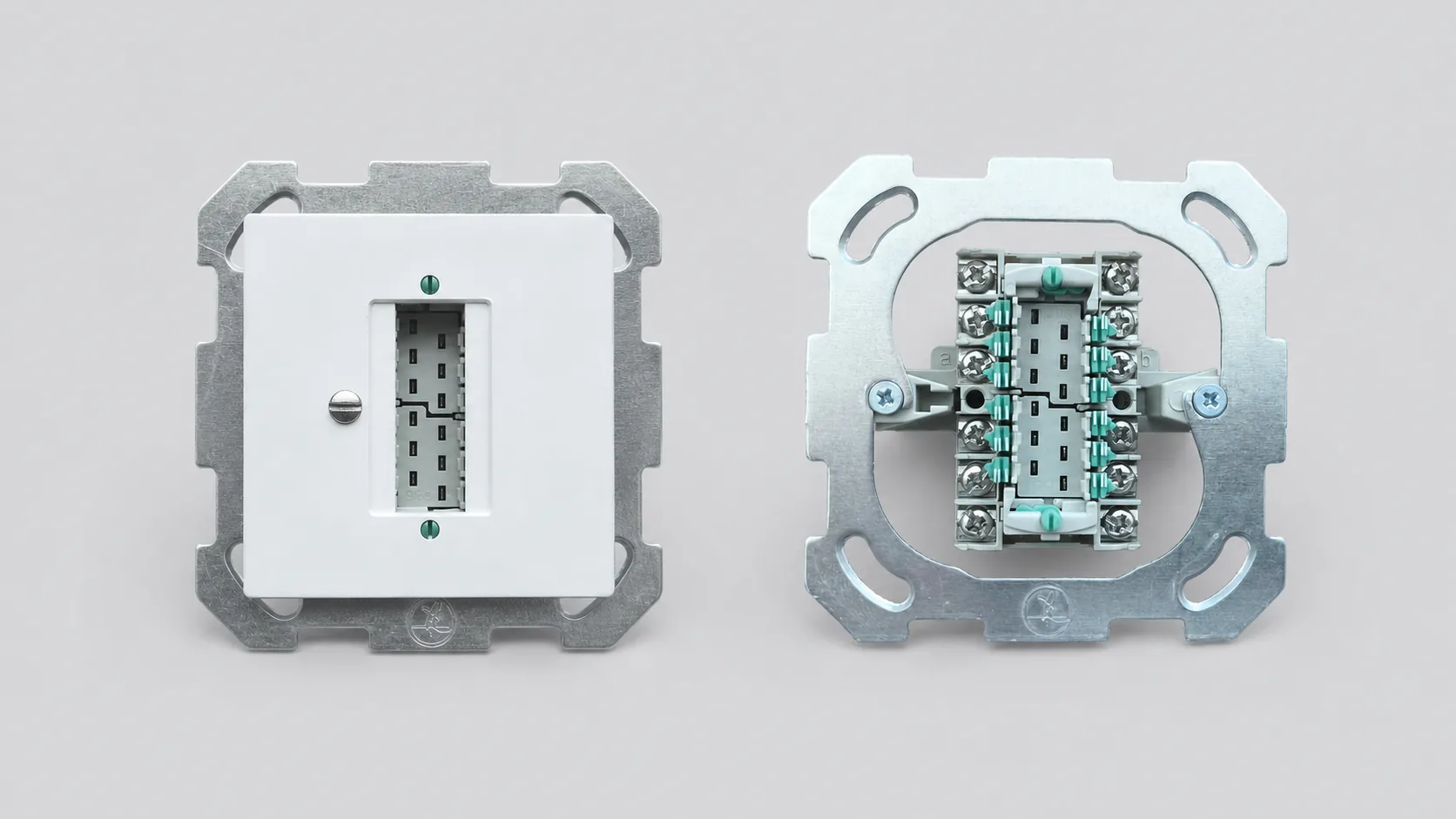
TT83 jack
The wall jack that matches the TT83 plug.
From Solder to the VS83 Distribution Frame
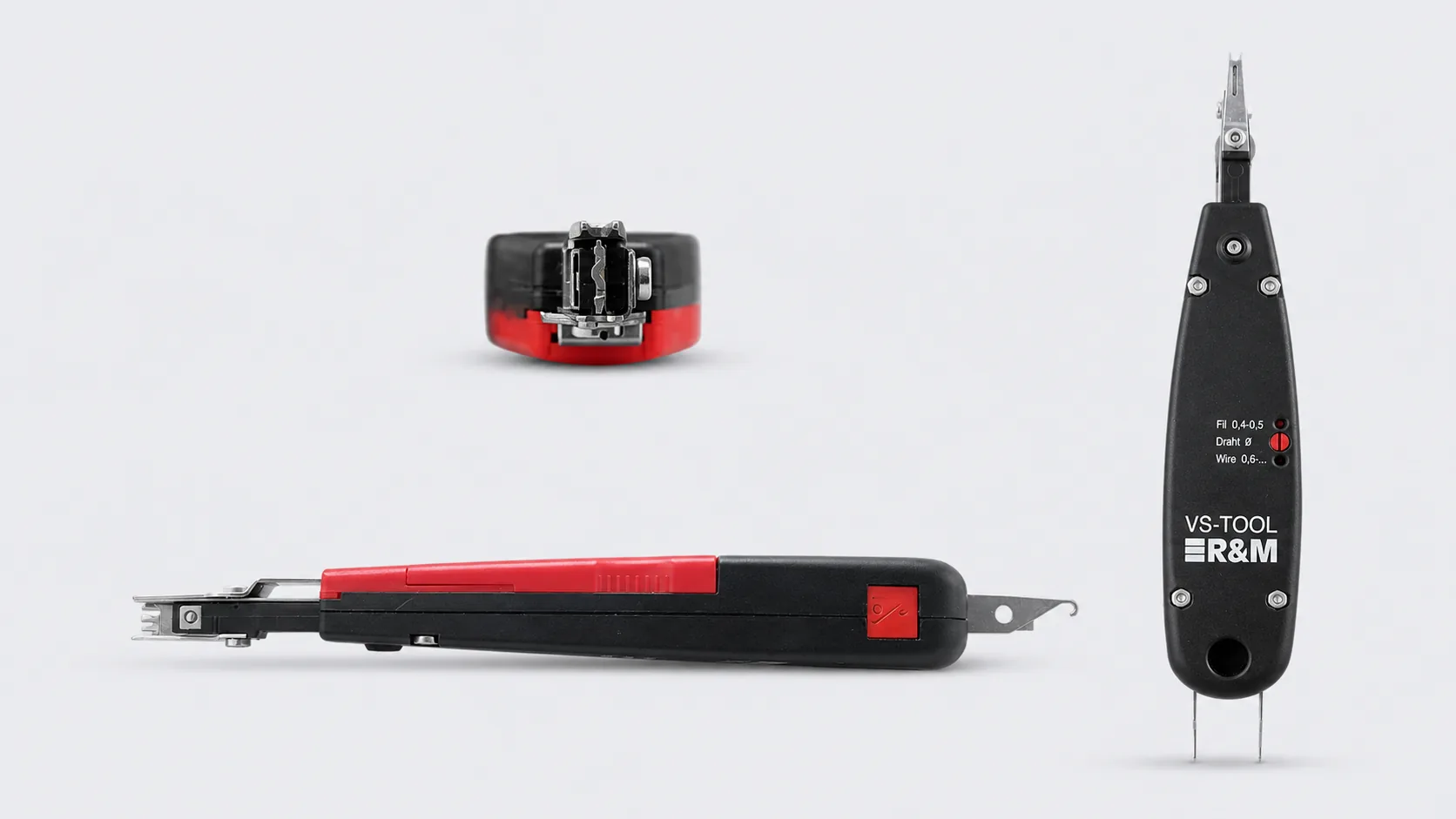
In the distribution frame, wires used to be soldered on by hand, one at a time. From 1983 came the VS83 distribution frame, also from Reichle & De-Massari, with insulation-displacement contacts: the punch-down tool pressed the still-insulated wire into the cutting contacts — their blades sliced through the insulation on each side as they made contact — and trimmed the excess wire in the same motion. No more soldering, no more stripping. The principle matches the well-known LSA technique; the slightly different shape of the press-down tool made it a Swiss variant. Same company and same year as the TT83 plug.
Home Wiring in Flux
Progress shows up most clearly in a simple question: how many jacks did a household need? That number swung back and forth over the decades, always in step with the latest technology.
Back in the day, a single phone sat on the hallway wall for the whole family. Then came the luxury: a jack in every room, parallel handsets everywhere. The cordless phone reversed the trend again. Suddenly one base station was enough, and the handset went wherever you did.
ISDN flipped it back once more: many elaborate installations again, this time for the S0 bus. Then came Wi-Fi, and jacks became scarce again. And most recently, fiber with Cat 6 cabling wired everything up properly again, for a gigabit and beyond. A constant back and forth between "wire everything" and "go as wireless as possible," depending on what the technology of the moment allowed.
Shared Lines: the GA Relay
When demand for connections rose, there were at times fewer lines than needed. So a single line would serve two completely separate subscribers, each with their own phone number, say in an apartment building or between neighbors. This was called a shared line (Gemeinschaftsanschluss).
It was controlled by the polarity coming from the exchange. Depending on how the line was polarized, the GA relay at the customer's end would ring one subscriber or the other. As long as one was on the phone, the other was locked out. That way neither party could interrupt the other, and eavesdropping wasn't possible either. For the people involved, it was noticeable: when one neighbor was on a call, the other's phone was dead.
The digital successor was the line doubler: one digital line coming in, two analog outputs each with its own number. A forerunner of the ISDN network termination concept.